AquaCOM brought community-led aquathermal energy to the 2026 European Week of Regions and Cities (13 October, Brussels), whose annual theme is Strong regions, strong Europe. The annual policy event gathers representatives of municipalities and regions from across Europe to discuss topics that are strategic for their future, including clean heating and cooling.
Under the title “Water is the new solar: aquathermal energy for life”, the AquaCOM session explored how the project is supporting a citizen-led energy transition across North-West Europe by empowering energy communities to develop sustainable, efficient heating systems.
Séan
Sweeney of Ballyhoura Development, the project’s lead partner, explained how
AquaCOM is developing replicable governance and technical models for
community-led aquathermal systems, tested directly at the project’s three pilot
sites. These pilots show that community-led aquathermal installations are
feasible at different scales and in different contexts.
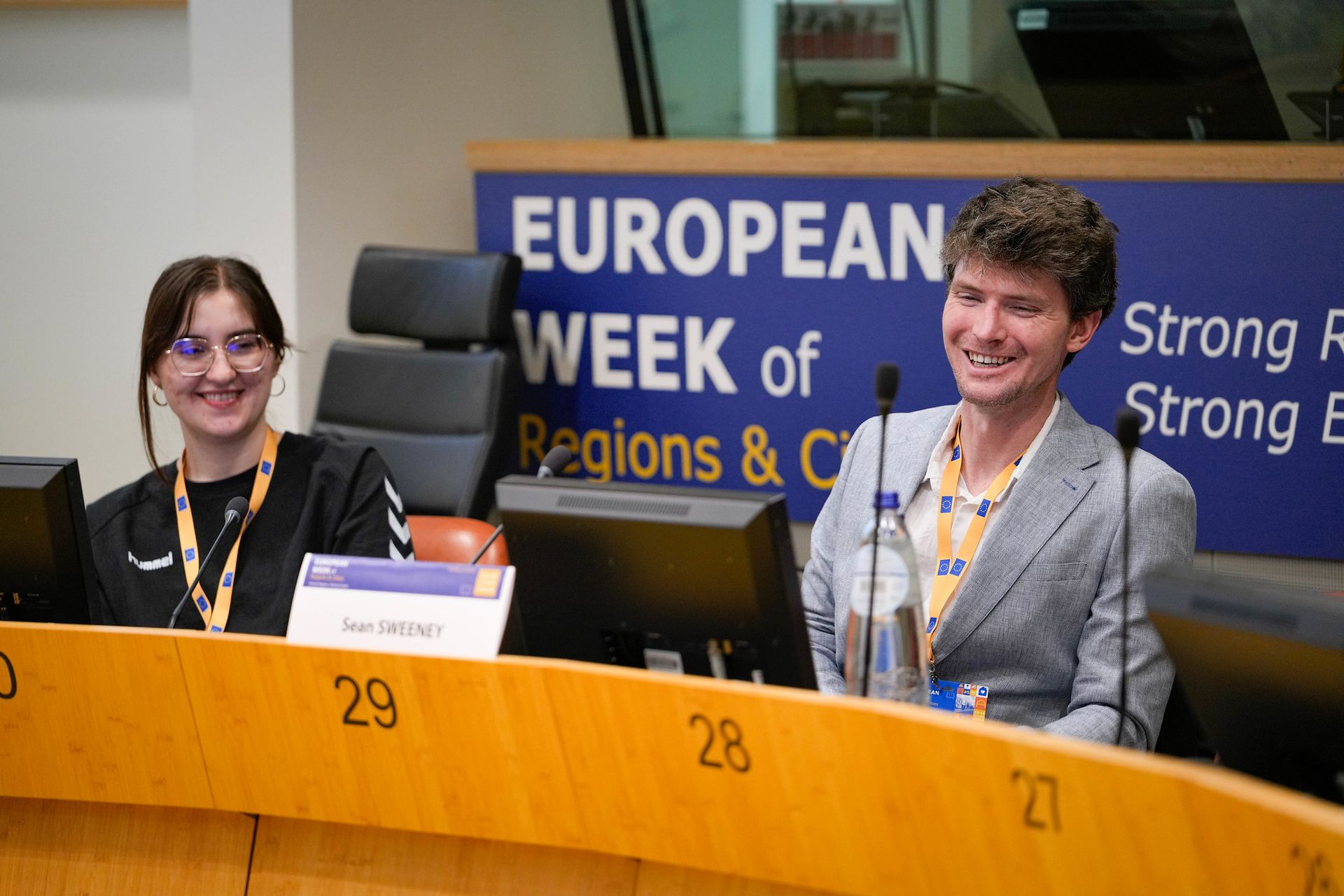
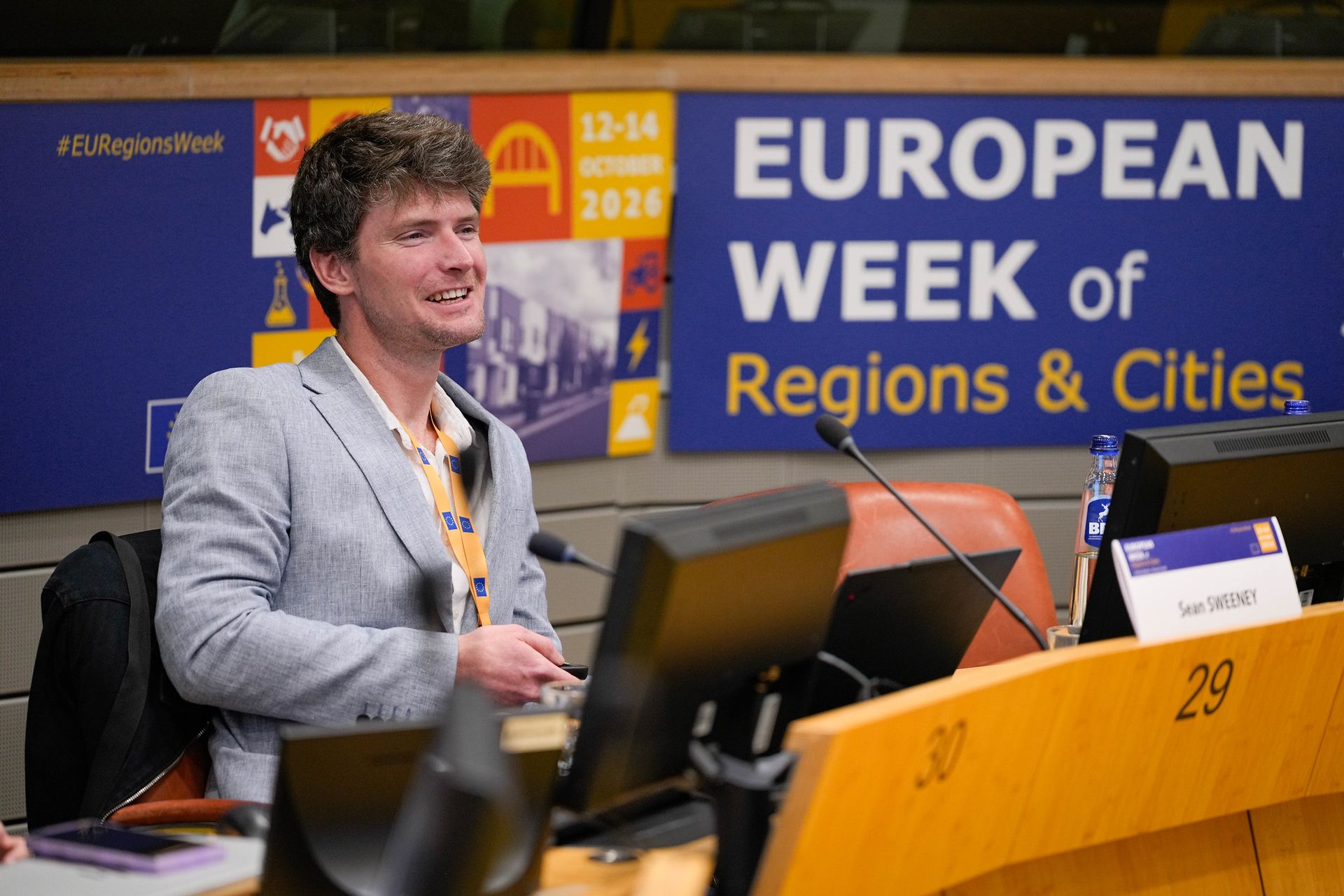
At policy level, Sweeney outlined the project’s work to address the lack of consistent, clear regulation enabling aquathermal energy (AQE) across the five target countries. He presented the AQE tracker, which analyses and compares national and regional efforts to create supportive conditions for AQE deployment.
Training is one of the project’s central pillars, and Sweeney highlighted the AquaCOM learning network. It promotes knowledge exchange through tailored capacity-building materials, including in-person masterclasses, pilot tours, webinars and a toolkit that will be made public at the end of the project. Sixteen early-adopter energy communities receive direct, targeted support from project partners and take part in in-person events, where they share common challenges and gather ideas and inspiration for their own aquathermal projects.
The session was a valuable opportunity to introduce the project to a new audience interested in innovative, clean ways to heat and cool municipal buildings with citizen participation. AquaCOM not only shows that alternatives to fossil fuels exist; it has also built a strong network, founded on cooperation and knowledge exchange, that gives communities a voice and a role in the clean energy transition.
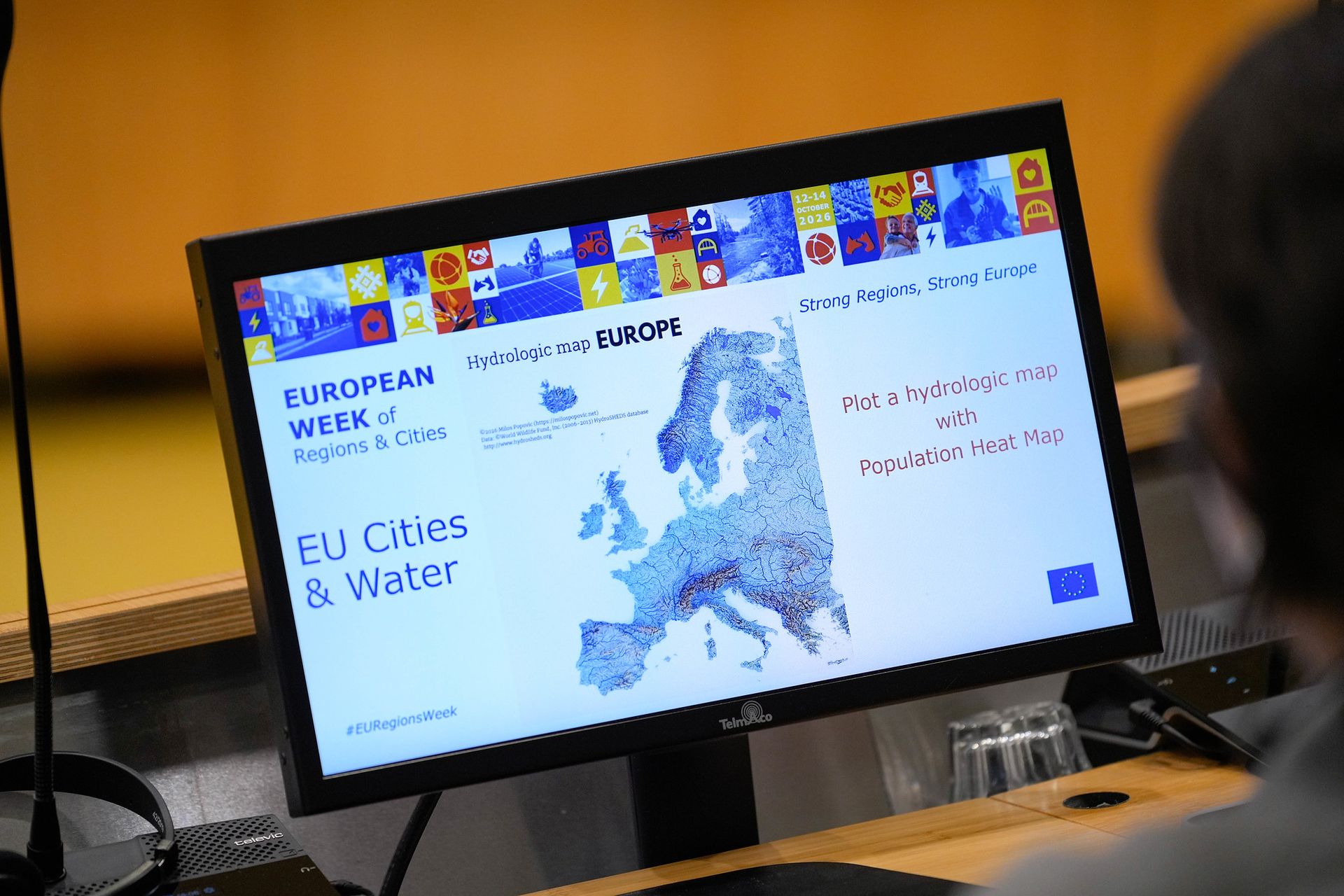
Find photos of the session here. © European Union / Denis Closon.