
France’s latest move to restrict gas boilers in new buildings marks a major turning point for heating in Europe. As the country accelerates its shift away from fossil fuels and toward electrification and decarbonised energy by 2030, the question is no longer whether change is coming, but which solutions can deliver at scale. This policy is more than a regulatory update; it is a strong market signal that fossil-based heating is rapidly becoming obsolete, pushing municipalities, communities, developers, and energy planners to rethink their strategies and invest in cleaner alternatives.
In this context, aquathermal energy stands out as a highly relevant solution, offering a source of heat which is renewable, efficient, locally available and scalable, particularly when integrated into district energy networks. The transition underway is not just about replacing gas, but about reshaping entire energy systems; and water-based heat could play a central role in that transformation.
Why aquathermal energy is the next frontier in clean heating
Aquathermal energy captures thermal energy from water sources such as rivers, lakes, canals, oceans or sewage water, then upgrades it with a heat pump for heating and cooling buildings. It is a renewable heat solution that can serve residential, commercial, and industrial needs.
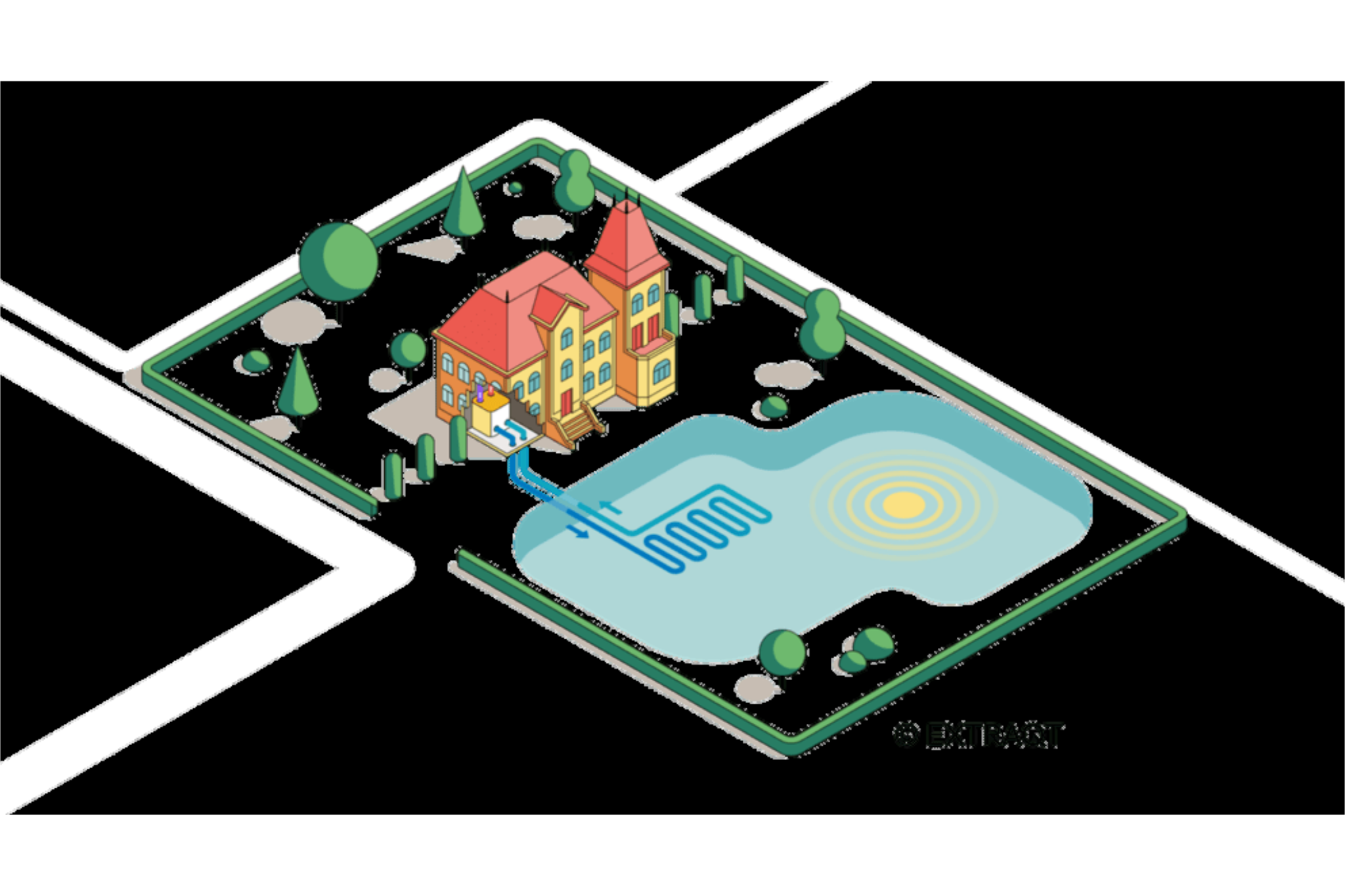
One of its biggest strengths is efficiency. Aquathermal systems can consume only about a quarter of the electrical energy required by fully electric heating while still delivering the same useful heat output. This high performance is largely explained by the thermal stability of water: throughout the year, water bodies experience much smaller temperature variations than air, remaining warmer in winter and cooler in summer. That makes it an attractive option in a system where electricity is becoming the backbone of decarbonised heating.
Why it matters now
Heating is one of the hardest sectors to decarbonise, especially in dense urban areas where buildings need practical solutions that work at scale. The French government has already pointed to electricity as a national asset and is pushing stronger electrification of heating and transport.

Aquathermal energy not only supports this policy direction, but also helps deliver the national target to raise the share of renewable heat across multiple uses, including building heating and cooling. Aquathermal energy can play a meaningful role in that mix, as it can be integrated into district heating systems, new developments, and energy-efficient building networks.
Stable prices and greater resilience
Aquathermal energy reduces exposure to volatile gas prices, lowers carbon emissions, and fits naturally into long-term energy planning. It also aligns with the direction of public policy, which increasingly favours electrification and low-carbon heating infrastructure.
There is also a resilience argument. As Europe continues to face geopolitical and price shocks linked to fossil fuel imports, local renewable heat sources become more strategically important.
A better fit for the next generation of buildings
New buildings are the easiest place to deploy aquathermal energy at scale, because systems can be designed from the start around renewable heat infrastructure. That makes it a natural response to France’s new gas restrictions in construction. Instead of treating the ban as a challenge, the sector can see it as an opportunity to build smarter, cleaner heating networks from day one.
What about the rest of Europe?
France's decision to move away from gas boilers in new buildings is a sign of what is coming across Europe: a faster transition toward clean heat. Aquathermal energy stands out because it's renewable, efficient, and already proven in real-world projects. If the heating sector is looking for a technology that combines climate benefit with sound engineering, aquathermal energy is one of the strongest candidates.