Decarbonising Europe’s heating and cooling sector is one of the most significant hurdles in the green transition. While technical solutions exist, the real challenge often lies in how these projects are governed, financed, and embraced by local citizens.
On May 6 2026, in the seaside town of Jūrmala, Latvia, the session "Developing community-led heating and cooling" tackled these questions head-on. Organised as part of the European Energy Communities Forum, the workshop brought together experts from the projects AquaCOM and MUSE DHC as well as from the organisations REScoop.eu, and Energie Samen to showcase how collective action can turn aquathermal energy into a community asset.
Navigating the EU policy landscape
The session opened with a deep dive into the regulatory framework. While electricity-focused energy communities have gained significant traction, heating and cooling often lag behind in policy recognition.
Tom Vasseur, coordinator of the Cool Heating Coalition highlighted that since heating and cooling account for over 50% of Europe’s final energy consumption, they must be central to local energy planning. The discussion underscored a critical gap: many national frameworks still lack specific guidelines for thermal energy sharing, creating hurdles for communities ready to invest in collective heat pumps or district networks.
From theory to practice: aquathermal case studies
What does community-led heating look like on the ground? The workshop featured three pioneering aquathermal projects from Belgium and the Netherlands, presented by Dirk Vansintjan, from the AquaCOM partner REScoop.eu, and Ilonka Marselis, from Energie Samen.
Rotselaar Mill site
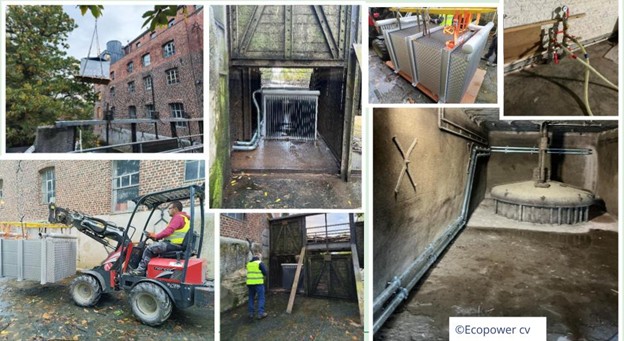
In Rotselaar, Belgium, the transition takes a circular approach at a historical watermill on the River Dijle. This pilot uses a closed-loop heat exchanger to pull thermal energy from the flowing river, while the electricity required to run the 3 heat pumps is generated by the mill’s own hydroelectric installation. This partnership between the AquaCOM partner Ecopower cooperative and local technical experts shows that heritage sites can be repurposed to provide modern, carbon-neutral warmth.
These examples demonstrated that with the right technical support and community engagement, even unconventional heat sources can be harnessed to replace fossil gas.
Soester energie
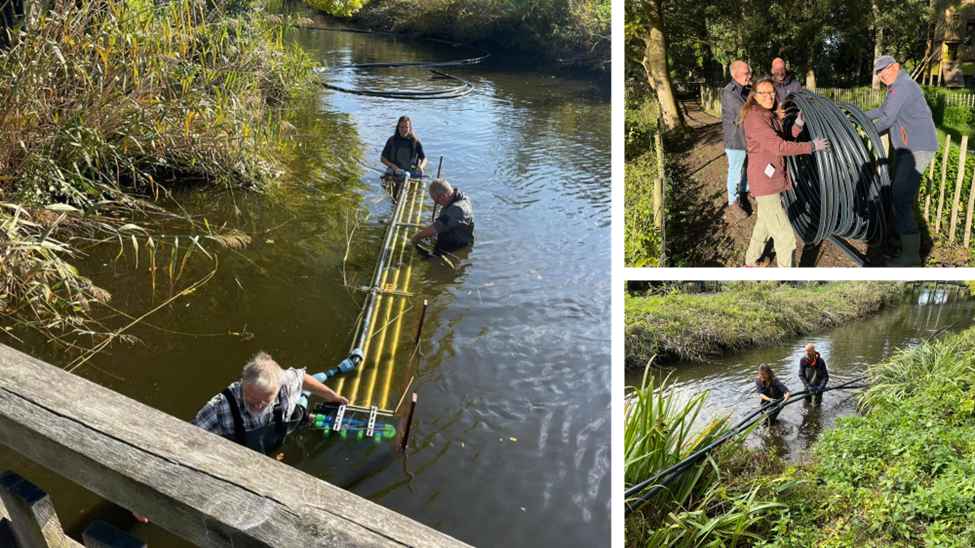
The initiative in Soest, the Netherlands serves as a compelling blueprint for neighborhood-level transformation. This homeowner-led project focused on a modular aquathermal solution, gaining momentum after a single successful example captured the neighborhood’s imagination. By starting small with a mini-network of three houses, the project created a tangible showcase that allowed residents to experience the technology firsthand. This grassroots approach ensures that groups of houses around local ponds are now being connected with the full engagement and initiation of the homeowners themselves.
Inspiring new communities
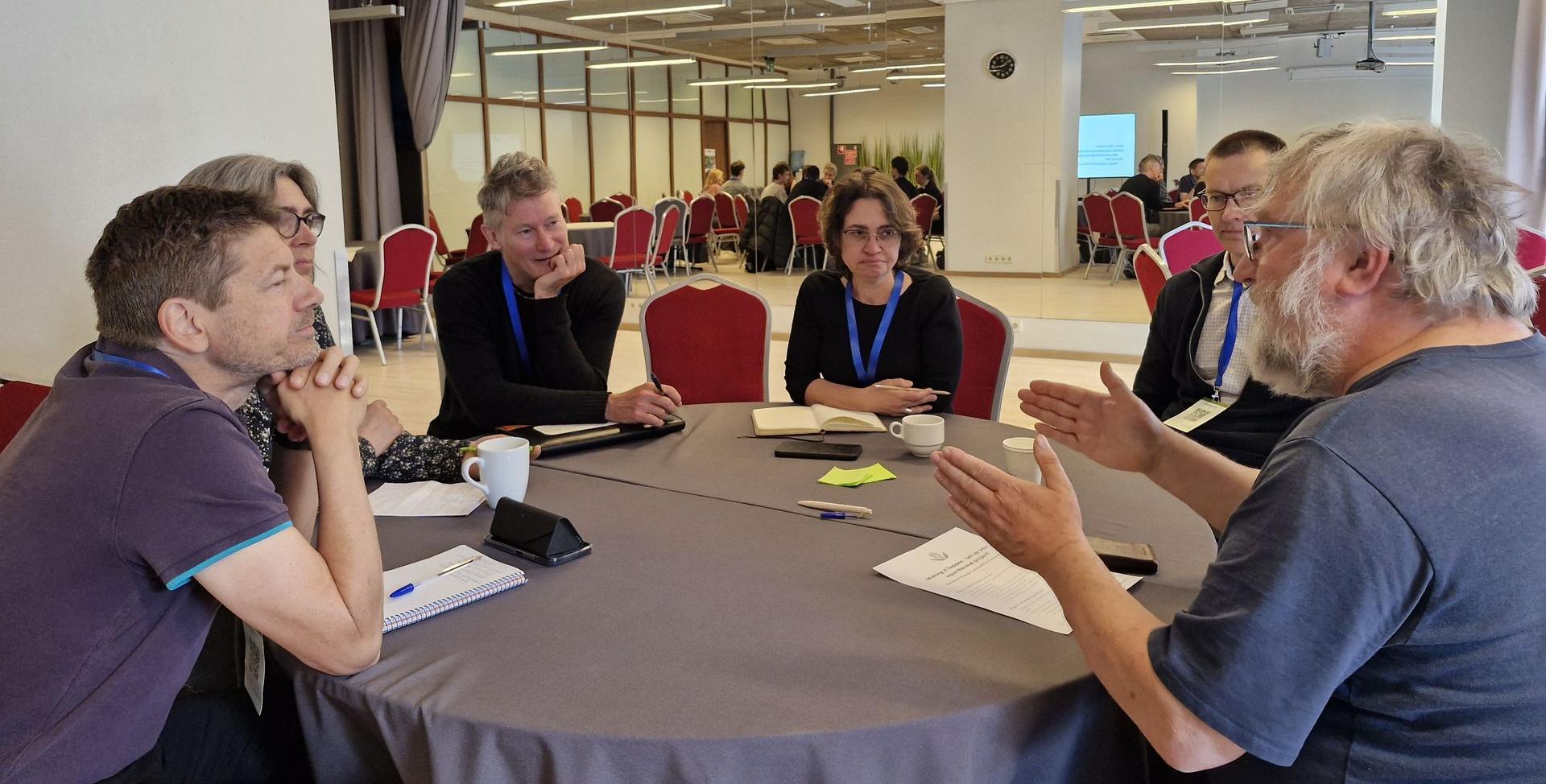
The final part of the session moved from listening to doing. Participants engaged in an interactive exercise to map out potential sites in their own neighborhoods. This moderated discussion encouraged attendees to flesh out a vision for community engagement, identify necessary stakeholders, and anticipate the hurdles required to bring a local aquathermal project to life.
The path forward: integration and scale
As the session concluded in Jūrmala, one message was clear: the heat transition is a social challenge as much as a technical one.
To reach the scale required for EU climate targets, community-led initiatives must be integrated into formal municipal planning. As MUSE DHC continues its work across Europe, the focus remains on empowering citizens to take ownership of their heating and cooling energy, ensuring a transition that is not only green but also fair and resilient.
The AquaCOM AQE Tracker provides a comprehensive overview of the aquathermal energy regulatory landscape - and other conditions that may support or hinder the technology's development - across the five project target countries: Belgium, France, Ireland, Germany, and the Netherlands.