A quiet revolution is taking place across North and West Europe, where communities are joining the clean energy transition by adopting aquathermal energy solutions to heat their buildings and sanitary water.
On 26 May, we joined our sister project, the Interreg North Sea WaterWarmth project, at its final event in Antwerp, Belgium. Both Interreg projects share a common mission: paving the way for aquathermal energy across the North-West and North Sea regions.
Drawing on insights from their own pilot sites and research, AquaCOM partners contributed to several panel discussions and breakout sessions. Below are the major takeaways.
What does aquathermal energy need to become a well-established renewable heating source in Europe?
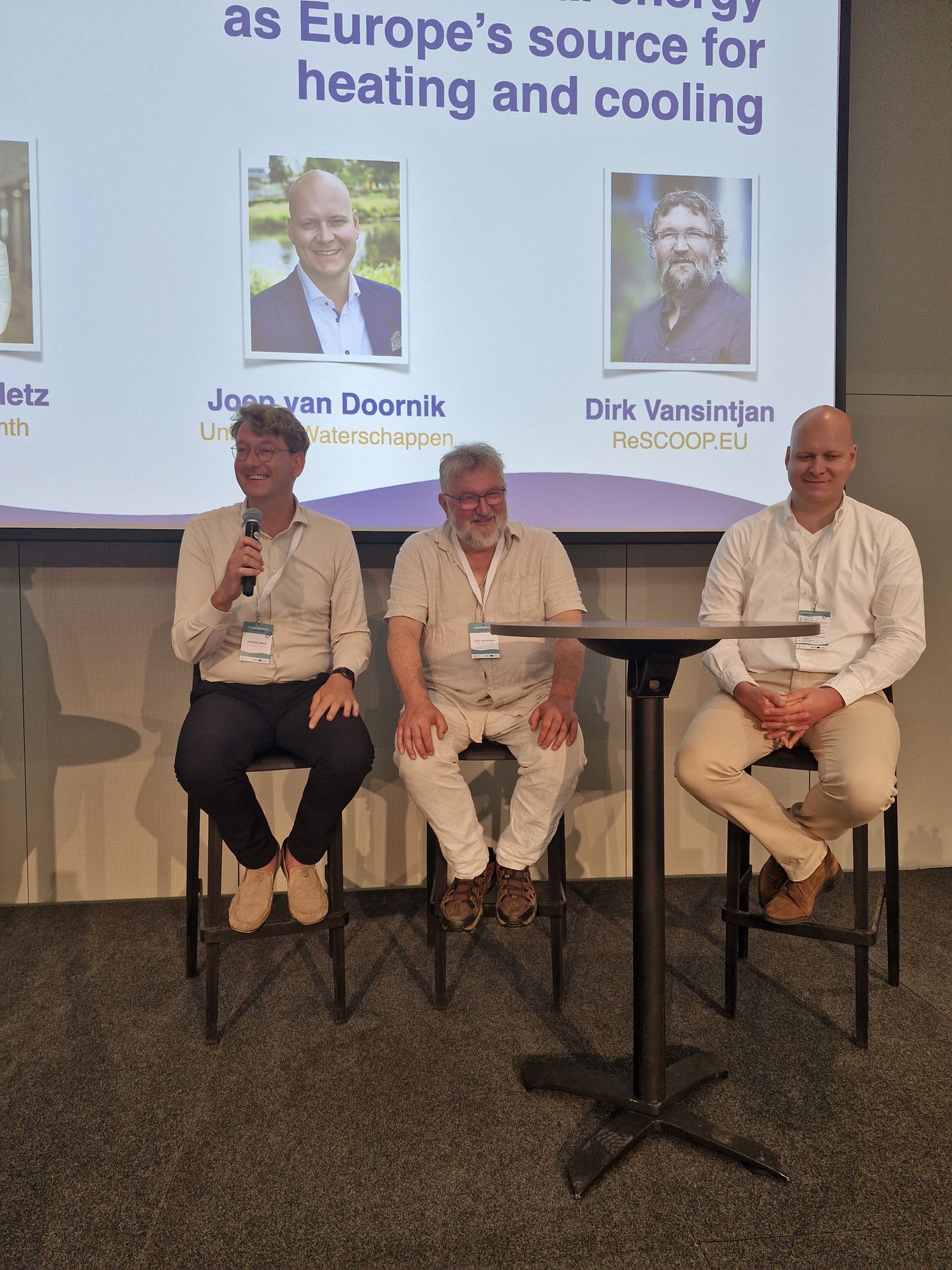
"In a country like the Netherlands, one third of all homes could be heated using water," said Andries Metz from our partner Province of Fryslân, opening a panel debate on aquathermal energy as Europe's source for heating and cooling.
All panellists agreed on the significant potential of aquathermal energy across Europe. Dirk Vansintjan, from AquaCOM partner REScoop.eu, stressed the need to raise awareness of the technology and to develop a more supportive legal environment - one that enables rather than obstructs aquathermal projects. On affordability, Metz noted that real-world case studies in the Netherlands show aquathermal systems become cheaper than fossil fuel systems over a 25–30 year horizon (or even shorter for small projects). However, Vansintjan pointed out that in countries like Belgium, where electricity is taxed more heavily than gas, aquathermal installations face a structural competitive disadvantage that complicates their business case.
Building trust is key to a successful energy transition
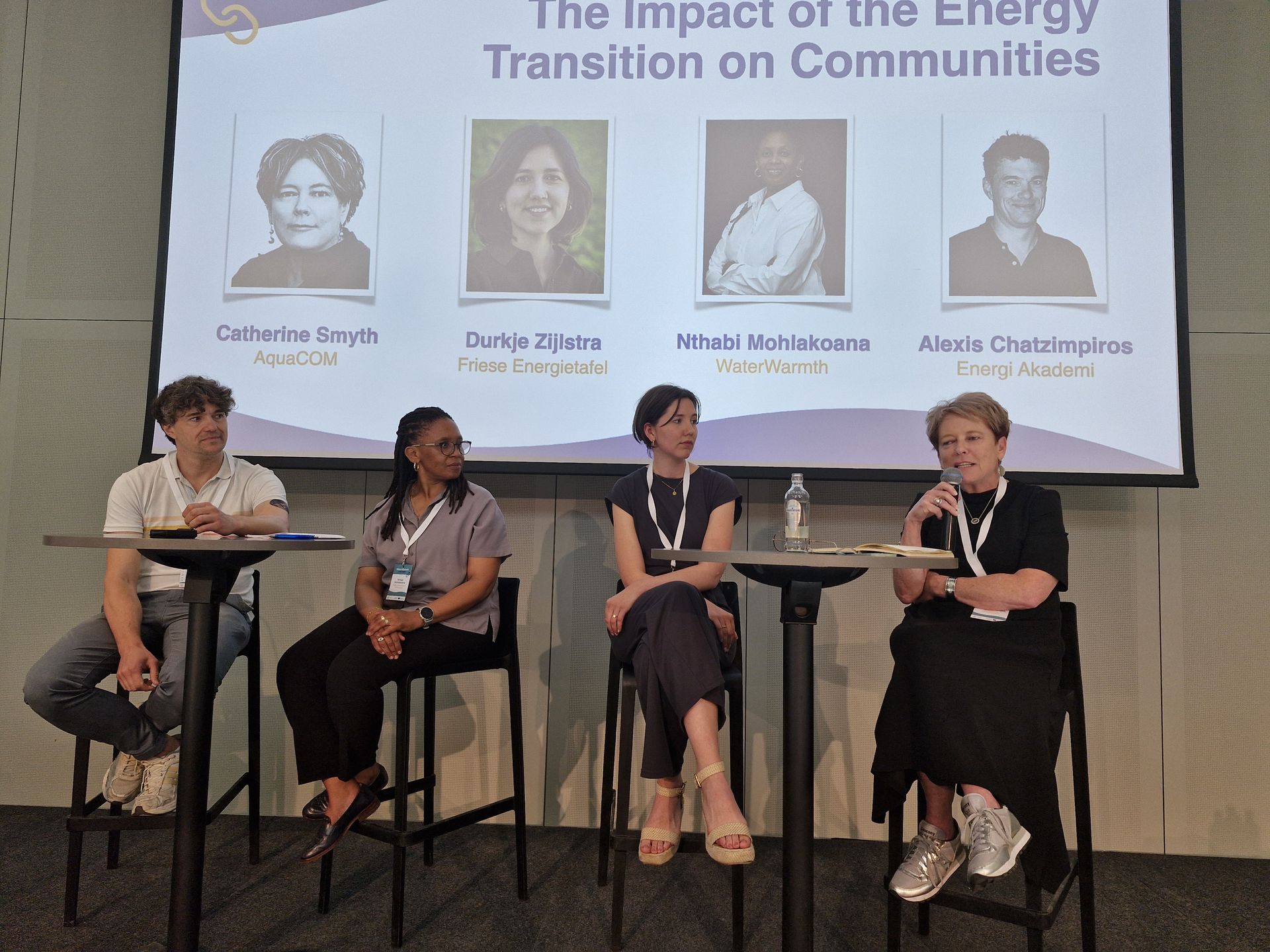
A second panel focused on the importance of meaningfully involving the communities directly affected by the clean energy transition. Trust and buy-in can only be built through long-term relationships with community members.
Catherine Smyth, AquaCOM Project Coordinator, highlighted the need to equip these communities with the skills, tools, and confidence to contribute meaningfully, and participate fully in the process. Speakers and public concluded the session in agreement that confidence, borne of competence, is the key ingredient for mobilising a community around its own heat transition.
Serious play: Design your own district heating network
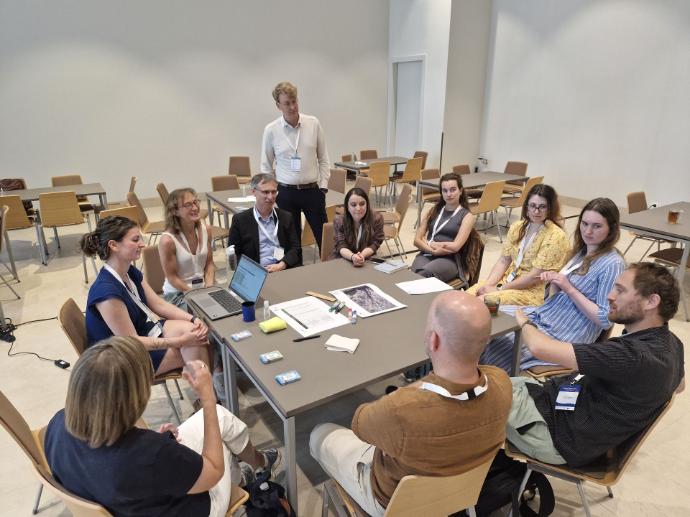
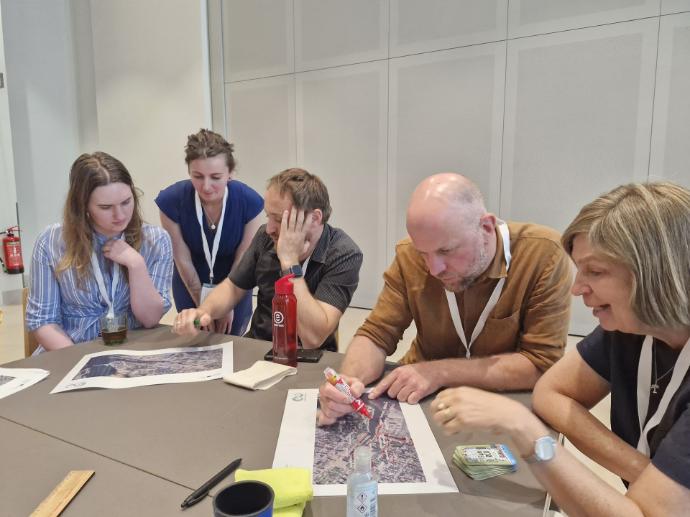
In one of the breakout sessions, Lucie Fauvin, from AquaCOM partner SPL BER, presented a serious game about district heating, developed entirely in-house. In this interactive session, participants design their own district heating projects by setting real-world market conditions and mapping out a network in the Brittany city of Lorient. Just as in real life, players must navigate unpredictable events such as rising gas prices, construction delays, hesitant end users, and geopolitical disruptions, including, for instance, the closure of the Strait of Hormuz.
The ABCs of closed-loop aquathermal systems
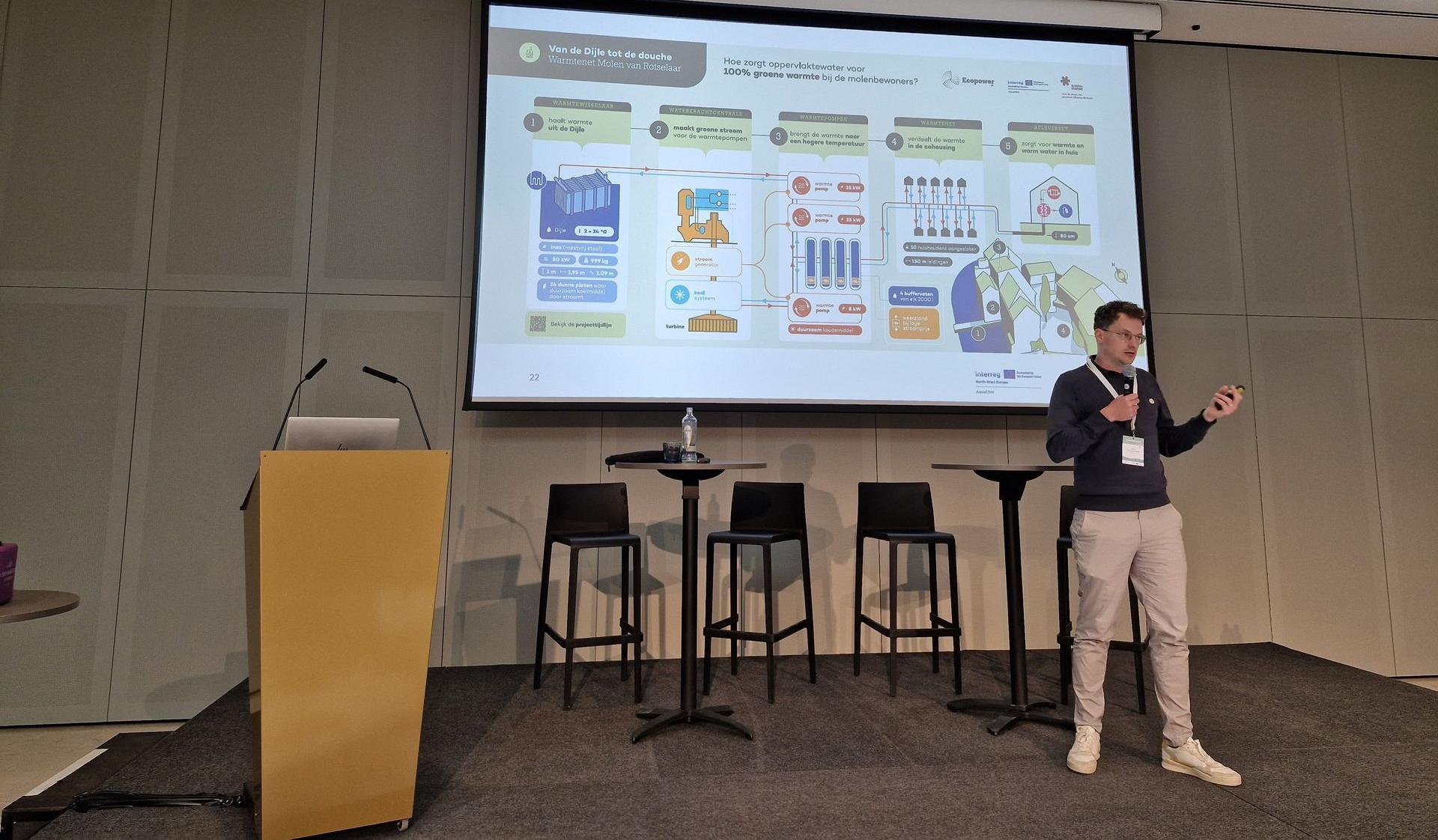
Closed-loop aquathermal systems are well-suited to lower-power projects (under 500 kW) across a wide range of conditions. Lenn Coussement from AquaCOM partner EXTRAQT introduced the potential of these systems and their contribution to the shift towards sustainable heating, particularly in regions like Flanders, where 40% of the population lives near a body of water. Drawing on real-world examples from Belgium and the Netherlands, including recently launched AquaCOM pilot sites in Rotselaar and Vlieland, Coussement demonstrated that closed-loop systems work effectively in both fresh and salt water.
Accelerating the heat transition together
This event made clear that needs, challenges, and opportunities are converging across Northern Europe. The Interreg Programme is playing a vital role, not only in promoting this technology across multiple regions, but in building a strong network for mutual support, knowledge exchange, and inspiration.
To accelerate the heat transition and meet EU renewable energy targets by 2030, aquathermal energy must be part of the mix. That means action on all fronts: raising awareness, creating supportive legal frameworks, unlocking dedicated funding, and genuinely including communities in the process.